Policy
I work with governments and international organizations to turn economic evidence into better fiscal policy — across tax reform, local public finance, fiscal incidence, and trade. My approach pairs rigorous empirical analysis with direct engagement with the policymakers who act on it.
Engagements
Tax, Revenue & Formalization
Gender-Responsive Tax Administration & Digitalization

Asian Development Bank · 2026–present · Ongoing
Leading gender integration in the design of a major ADB-financed tax administration digitalization program in Pakistan — preparing the program's Gender Assessment and Action Plan and recommendations for inclusive digital taxpayer and customs services, with inputs to the feasibility study and Board documents. Also commissioned by ADB's Gender Equality Division to author a background paper on gender and Pakistan's tax system for the Country Gender Assessment, which informs ADB's Country Partnership Strategy.
Property Tax Reform — Punjab's Shift to Capital Valuation


2025 · Completed
Supported Punjab's transition of the Urban Immovable Property Tax (UIPT) from an annual-rental-value (ARV) basis to a capital-valuation (CV) system. Delivered technical training to ETNCD senior and middle management on assessment under the new system and on managing the transition. The CV system has since been rolled out province-wide and now underpins assessments; findings from the workshop series informed revisions to several UIPT administration rules.
Inter-Agency Coordination for Property Tax (UIPT)




Participatory Local Governance Programme (EU / BMZ) · 2024–2025 · Completed
Authored the study and led the 2024 workshop on improving coordination, cooperation, and communication across the agencies that administer Punjab's Urban Immovable Property Tax — ETNCD, the Finance Department, the Board of Revenue / Punjab Land Records Authority, municipal corporations, and the Urban Unit. The findings made the case for a standing coordination mechanism, which the Government of Punjab formally notified as the UIPT Coordination Working Group in 2025 — which I supported as technical resource person, setting its agenda and framing the challenges it took up.
Informality & Tax Evasion: Wholesale-Retail & Real Estate
2023 (published 2025)
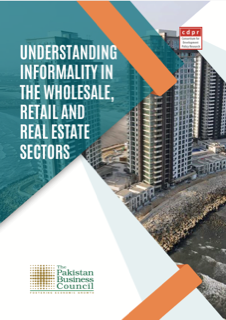
Co-authored a Pakistan Business Council–commissioned study quantifying tax evasion and informality across Pakistan's wholesale-retail and real-estate sectors and mapping the political economy that sustains them. Set out concrete reform pathways — data integration around a single personal identifier and point-of-sale systems for retail; valuation, capital-gains and transparency reform for real estate. The recommendations closely track the documentation reforms the federal government has since pursued in both sectors.
Public Finance & Distribution
World Bank — Sri Lanka: Distributional & Fiscal Analysis

Poverty & Equity Global Practice · Short-Term Consultant · Completed
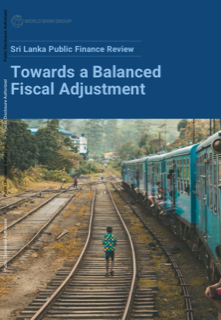
Served as a short-term consultant to the World Bank's Poverty & Equity practice during Sri Lanka's post-crisis period, producing background distributional analysis for two of the Bank's flagship Sri Lanka reports: a CEQ (Commitment to Equity) assessment of how taxes and transfers fall across the income distribution under fiscal consolidation (supporting the Public Finance Review), and a household-level analysis of how heat stress, flooding, and crop-productivity shocks raise poverty across districts (feeding the Country Climate and Development Report).
Public Finance Review → · Country Climate & Development Report →
Trade & Competitiveness
Reviving Punjab's Dry Ports — Assessing the Infrastructure Cess


with Pakistan Customs & port authorities · 2023 · Completed
Led an econometric study for the Punjab Revenue Authority on whether the Punjab Infrastructure Development Cess (PIDC) was driving the decline of the province's dry ports. The analysis found the PIDC had a negligible effect on import value, goods declarations, and the number of importing firms — pointing instead to import-clearance delays, the uncertain payoff of "speed money," and high freight charges (relative to Karachi) as the significant constraints. Combined econometric evidence with focus groups and stakeholder surveys; the findings bear directly on the current provincial debate over scrapping the cess.
Agriculture & Food Export Potential of Pakistan



2025
Lead-authored a study for the FCDO-funded Revenue Mobilisation, Investment and Trade (ReMIT) programme quantifying the unrealized export potential of ten priority agriculture and food products — from rice and bovine meat to cherries and olive oil — using trade-data analysis and stakeholder consultations. Diagnosed the cross-cutting constraints holding exports back (SPS / quality standards, post-harvest handling, trade facilitation), benchmarked Pakistan against India, Bangladesh, and Türkiye, and set out a product-level reform agenda across production, market access, and export facilitation.
Interested in working together? I take on advisory engagements and research partnerships with governments, international organizations, and policy groups on tax, public finance, gender, and trade. Get in touch or view my CV.
Substack
Latest Posts
What a century of name changes, from Bombay to Hollywood, reveals about the economics of discrimination
How AI can help developing countries collect the taxes they're already owed
Op-eds & Articles
Do online marketplaces reduce gender discrimination?
Examines how gender discrimination manifests in Pakistan's online marketplaces, finding that while digital platforms eliminate price gaps, women face disproportionate non-economic costs through unsolicited contact that may constrain their market participation.
Pakistan's Tax Problem: Not a Mystery But a Method
Argues that Pakistan's tax challenges stem not from an elusive informal economy but from distortionary policies and political protection of undertaxed sectors — and proposes treating tax reform as an applied science grounded in evidence and behavioral insights.
Potential of Behavioral Insights to Improve Tax Compliance
Explores how behavioral tools — social norms, simplification, and citizen engagement — can complement traditional enforcement to strengthen tax compliance in Pakistan.
The Dark Side of Real Estate: Uncovering its Role in Undermining Investment, Inequality, and Growth
Examines how distortions in real estate markets — speculation, tax treatment, and informality — affect investment, inequality, and long-run growth.
Rationalizing Tax Expenditures
Discusses the scale and structure of tax expenditures and the trade-offs involved in reforming exemptions and special regimes to broaden the tax base.
Electronic Invoice Monitoring Systems to Improve Tax Compliance
Summarizes evidence on how e-invoicing and electronic monitoring can enhance VAT compliance and strengthen enforcement capacity in low- and middle-income settings.
Role of Supply Chains in Determining Farmers' Productivity and Consumer Prices
Discusses how intermediaries, infrastructure, and information flows in agricultural supply chains shape farmer productivity and price transmission to consumers.
In the Media
CDPR Holds Workshop on "Tax Reforms for Inclusive, Sustainable Growth"
News coverage of a workshop on tax reform and inclusive growth, featuring discussions on how better-designed tax systems can support investment, formalization, and equity.
Doing Tiny Jobs for Tinier Pay
Reporting on online gig work and micro-tasks, featuring research on how digital labor markets structure incentives, pay, and worker protections.
Talks & Events
Access, Resilience, and Sustainability: Pathways to Food Security in Pakistan
Event exploring supply chains, climate risks, and institutional reforms' roles in Pakistan's food security, featuring research and public policy insights.